Blog
The Spring & Fall Roof Maintenance Checklist Every Indiana Homeowner Needs
Published
Category
Tips
Indiana roofs take a beating — hail in May, humidity in July, ice in February. Run this twice-a-year maintenance checklist to catch problems early, avoid surprise leaks, and add years to your roof's lifespan.
Roofs in Indiana have a hard job. They take spring hail, summer humidity, fall freeze-thaw cycles, and winter ice loads — sometimes all in the same year. The average asphalt shingle roof in central Indiana is rated for 25 to 30 years, but most fail closer to 18 to 22. The gap between rated lifespan and actual lifespan is almost entirely maintenance.
The good news: roof maintenance is cheap, mostly preventive, and adds real years to your roof. The bad news: almost nobody does it until water is dripping into the kitchen.
This checklist is built around Indiana's specific weather pattern. Run it in spring (April or May, after the last freeze) and again in fall (October, before the first hard frost). Twenty minutes twice a year is enough to catch most of what fails.
Why Indiana roofs fail early
Before the checklist, it helps to understand what you're actually fighting. Three things age Indiana roofs faster than the rated lifespan suggests:
Freeze-thaw cycles. Central Indiana averages 30 to 50 freeze-thaw transitions per winter. Every cycle drives moisture into small cracks, expands it, and widens the cracks. Asphalt shingles, sealant beads, and flashing all degrade faster under repeated freezing.
Ice dams. Snow melts on warm sections of the roof, refreezes at the cold eaves, and forms ice dams that back water up under the shingles. This is the leading cause of unexpected interior water damage in Indiana. Ventilation and insulation are the prevention.
Humidity and biological growth. Indiana's summer humidity supports algae, moss, and lichen growth, especially on north-facing slopes. These are not just cosmetic. Moss roots lift shingle edges and trap moisture against the roof surface.
Storm damage that accumulates. Most homeowners associate hail damage with a single dramatic storm. In reality, central Indiana sees small to moderate hail multiple times per year. Each event removes some protective granules and weakens the shingle slightly. By year 15, a roof that's never been replaced has absorbed dozens of minor storms.
The checklist below targets each of these.
Spring inspection: after the last freeze
The goal of a spring inspection is to assess winter damage and prepare for storm season. Run this in April or early May, ideally on a clear day after the snow and ice have fully melted.
1. Ground-level visual inspection. Walk the entire perimeter of the house. Look up at the roof from each side. You're scanning for missing shingles, lifted shingles, dark spots, sagging areas, or anything that looks different from last fall. Use binoculars if you have them.
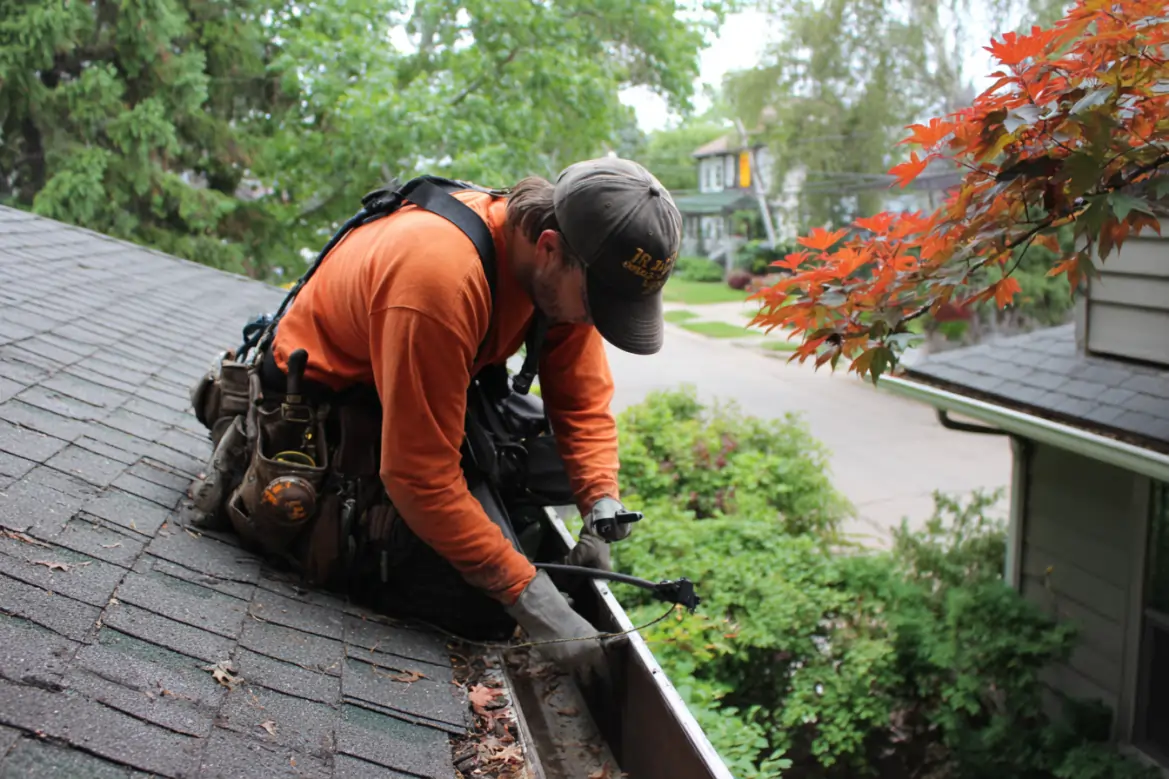
2. Check the gutters. Pull leaves and debris out of every gutter run. Run a hose through the downspouts to confirm flow. Look in the gutter bottom for asphalt granules — small dark sandy material. Some granule loss is normal. Heavy accumulation suggests the shingles are aging or have been hail-damaged.
3. Inspect the attic. Go up with a flashlight in the morning when the attic is cooler. Look for water stains on the rafters or sheathing, daylight coming through anywhere it shouldn't, mold or mildew (especially in corners), insulation that's been displaced or matted, and damp insulation. Damp insulation is the smoking gun for a slow leak.
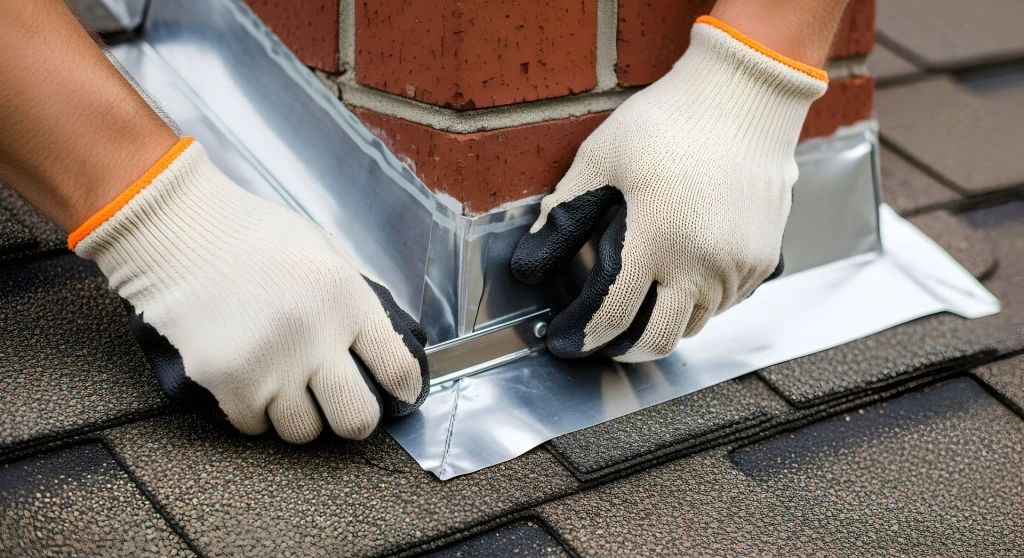
4. Look at the flashing and penetrations. Flashing is the metal that seals around chimneys, vents, skylights, and roof valleys. From the ground or via binoculars, check for visible separation, rust streaks running down the roof, or sealant that's cracked or peeling. Most leaks start at flashing, not at shingles.
5. Check the soffit and fascia. These are the boards that close off the eaves under the roof edge. Look for peeling paint, water staining, soft spots, or visible damage. Damaged fascia often means water is getting behind the gutters.
6. Look for moss, algae, or lichen. North-facing slopes and shaded sections are most prone to growth. Dark streaks running vertically down shingles are usually algae. Green patches are usually moss. Both should be addressed — algae with a specialized cleaner, moss with mechanical removal and prevention.
7. Check chimney mortar. If you have a brick chimney, look for crumbling or missing mortar between bricks (called "spalling"). Damaged mortar lets water into the chimney structure and eventually into the roof.
8. Trim back overhanging branches. Any branch within six feet of the roof should be cut back. Branches that touch the roof scrape shingles in wind, drop debris into valleys, and provide bridges for squirrels and raccoons.
9. Inspect vents and pipe boots. The rubber boots around plumbing vents typically last 10 to 15 years — much shorter than the roof itself. Cracked boots are an extremely common leak source. Look for visible cracking or pulling away from the pipe.
10. Schedule a professional inspection if anything looks off. Anything you can't identify, anything that looks new since last year, or any roof more than 12 years old benefits from a professional eye. Most local contractors will inspect for free.
Fall inspection: before winter sets in
The fall inspection is about preparing for ice, snow, and freeze-thaw. Run this in October before the first hard frost, when leaves have mostly fallen.
1. Clean the gutters completely. Leaves clogging gutters in winter cause ice dams, period. A full fall cleanout is the single highest-impact maintenance task on this list. Hire it out if you don't want to climb a ladder.
2. Verify all downspouts drain away from the foundation. Extensions should carry water at least four feet from the house. Pooling water near the foundation freezes, expands, and damages both the foundation and the lower siding.
3. Inspect the roof for summer storm damage. Indiana's spring and summer storm season may have caused damage you never noticed. Now is the time to find it — before snow covers everything. Look for missing or lifted shingles, dented vents and flashing, granule accumulation in gutters, and damaged ridge caps.
4. Check the attic insulation. Ice dams are largely caused by uneven attic temperatures. Heat escaping through poorly insulated areas melts snow on the upper roof while the eaves stay cold and refreeze the runoff. Indiana attics should have R-49 to R-60 of insulation. Visibly thin or matted insulation should be supplemented.
5. Verify attic ventilation is unobstructed. Soffit vents at the eaves and ridge or gable vents at the top create airflow that keeps attic temperatures even with the outside. Check that insulation hasn't been pushed against the soffit vents (this is extremely common). Verify ridge vents are clear.
6. Reseal any caulking that's failed. Around vent boots, flashing, and skylights, sealant degrades over time. If you see cracking or separation, replace it before winter. A tube of roofing sealant costs $10 and saves thousands.
7. Inspect for and treat moss. Moss and algae growth that wasn't addressed in spring will be worse by fall. Treat it now so winter moisture doesn't accelerate the damage.
8. Trim branches once more. Anything that grew over the summer should be cut back before winter. Ice-loaded branches break and fall, and they fall on roofs.
9. Check chimney crown and flashing. The concrete crown at the top of a chimney commonly cracks. Cracks let water into the chimney structure, where freeze-thaw destroys the mortar from inside.
10. Address anything you've been putting off. Roofing contractors in Indianapolis are busiest after every storm. Scheduling a repair in October typically gets you on the calendar within a week or two. Scheduling the same repair in March after the first freeze-thaw cycle wakes up every problem at once can mean a four-to-six-week wait.
What to never do yourself
A few items belong on a checklist of things to not attempt as a DIY project.
Power-washing the roof. Pressure washing strips granules from asphalt shingles and dramatically shortens roof life. If you need to clean moss or algae, use a low-pressure spray with a manufacturer-approved cleaning solution, or hire a roof-cleaning specialist.
Replacing shingles yourself. A few replacement shingles seem simple. In practice, matching the existing shingle, getting the courses right, and sealing properly is harder than it looks, and a poor patch creates a leak path. Have it done by someone who does it daily.
Walking the roof for fun. Every walk on the roof shortens its life. Granules come loose. Sealant beads break. Limit roof access to professionals doing necessary work.
Sealing every visible gap. Some "gaps" you see are intentional — drip edges, weep holes, ventilation paths. Sealing them creates new problems. If you don't know what something is, ask before you caulk it.
When to call a professional
Schedule a professional roof inspection if any of the following apply:
Your roof is 12+ years old and has never been professionally inspected
You've never had one done after moving in
You spot anything in the checklist above that you can't identify or address
You've had any major storm event (hail, severe wind, fallen branches) in the past 12 months
You're seeing water stains, mold, or any sign of interior moisture
You're planning to sell within the next 24 months (proactive repairs are worth far more than discounted asking prices)
A professional inspection takes 45 to 60 minutes and most local contractors offer it free. You get a written report, photographs, and a clear answer on what's needed and what can wait.
Build a maintenance log
One last thing worth doing: keep a simple maintenance log. Date, what you inspected, what you found, what you fixed. A one-page Google Doc is enough. The benefit isn't just remembering when you last did things — it's establishing a documented maintenance history that supports insurance claims later. If a hailstorm hits in year 14 and the adjuster argues your roof was already at end of life, a maintenance log showing consistent care is real evidence to the contrary.
Schedule your seasonal inspection
If you'd rather have someone else do the seasonal inspection, we offer free roof checkups across the Indianapolis metro. We document everything photographically, give you a written report, and only recommend work that's actually needed. No upsells, no pressure, no storm-chaser tactics.
Schedule your free seasonal inspection with Prime 5 Exteriors. We'll get out within the week and you'll know exactly where your roof stands.
Frequently Asked Questions
How often should I have my roof professionally inspected? For roofs under 10 years old with no known damage, every 2 to 3 years is sufficient. For roofs 10 years and older, annual inspections are smart. After any major storm event, an immediate inspection is recommended regardless of age.
Can I just inspect the roof from the ground, or do I need to get on it? Most of what you need to spot is visible from the ground with binoculars. Climbing on the roof is rarely necessary for homeowners and often counterproductive. Leave actual roof access to professionals.
What's the difference between a roof inspection and a roof certification? An inspection is a visual assessment with a written report. A certification is a formal document stating the roof is in serviceable condition for a defined period (typically 2 to 5 years), often required during real estate transactions. Certifications are more involved and usually charged for, while inspections are typically free.
My roof looks fine from the ground. Do I really need maintenance? Most roof damage isn't visible from the ground. Granule loss, hail bruising, cracked sealant, and failing flashing all hide in plain sight. The point of the maintenance checklist is catching things before they become visible — because by the time it's visible, water is already inside the house.
Does roof maintenance void or affect my warranty? Quite the opposite. Most manufacturer warranties on shingles require evidence of reasonable maintenance and may be voided by neglect. A documented maintenance history strengthens both warranty claims and insurance claims. Just make sure any work done is by qualified professionals — DIY repairs can void warranties.
What’s better than insider perks, pro tips, and surprises?
Sign up to get the most recent blog articles in your email every week.
Other Blogs